
Write Your Tag Line Here
Our Certification
Our Achievements
- R & D
- Farmers
- Gallery
- Career
- Contact Us
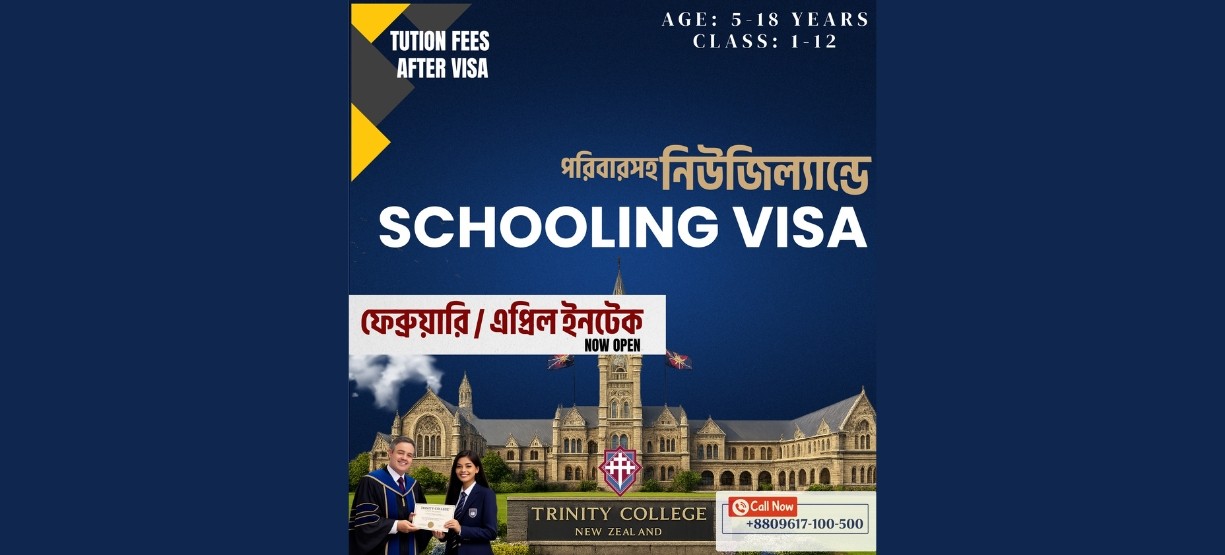
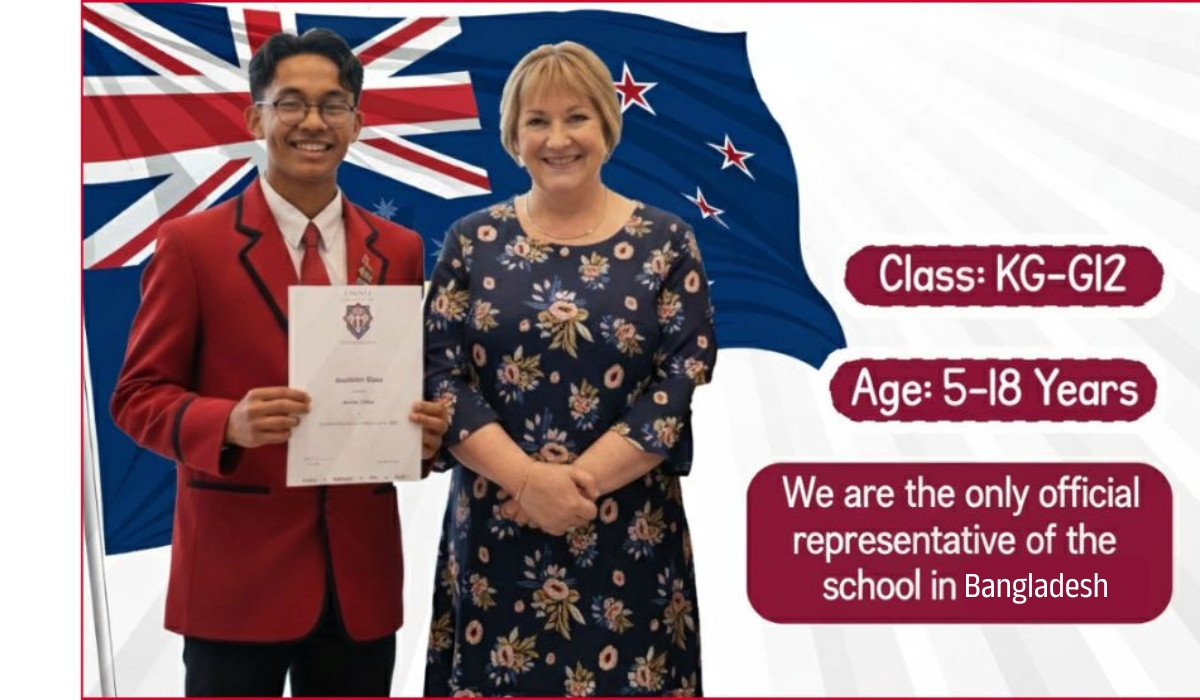
I sit here in my office every day, and I see the worry on parents' faces. You want the best for your children, and you are thinking about sending them abroad for school, but the idea feels scary. It is completely normal to feel this way. Many Bangladeshi families come to me asking if they can send their young child to study in a foreign country and if they can go with them. The answer is yes, and specifically, the schooling visa in New Zealand with parents is designed exactly for this situation.
This option is not for everyone, so let me explain who fits best. This pathway works well for families who value early international exposure and are ready to support their child’s education hands-on. We are talking about children between the ages of 5 and 17 who are ready to enter a primary or secondary school system that is very different from what we have in Dhaka or Chittagong. It requires a parent who is mentally prepared to live in a quiet, organized country and focus entirely on their child's well-being without the immediate distractions of a full-time job.
A very common question I get asked is about English proficiency. Parents often panic, thinking their Grade 5 or Grade 8 child needs a high IELTS score. Relax, because that is usually not the case for school-level admissions. New Zealand schools understand that young students pick up languages very quickly once they are in the environment. The focus is more on their academic background and their character.
However, the parent accompanying the child needs to be comfortable with English. You do not strictly need an IELTS score for the guardian visa in many cases, but you must be able to manage daily life. You need to talk to teachers, go to the grocery store, and handle medical appointments. If your English is weak, life becomes very isolating. I always advise parents to brush up on their communication skills because you will be the primary support system for your child in a new land.
When we sit across the desk and look at documents, I tell parents to focus on the story their papers tell. It is not just about stacking certificates. The visa officer needs to see that you are a genuine family with a clear educational plan. We need to show why New Zealand is better for your child than continuing school here in Bangladesh.
You will need to show strong ties to home. This means demonstrating that you have reasons to return to Bangladesh after the studies are over. When applying for a New Zealand schooling visa from bangladesh, the consistency of your documents matters most. We organize your academic records, your identification, and your financial evidence to prove that you can support this journey comfortably. It is not just about having the papers; it is about presenting them in a way that makes sense to the immigration officer.
There is often confusion about where to go and who decides the outcome. People often look for the New Zealand Embassy in Bangladesh to submit files directly, but the process has moved largely online or through designated application centers. The physical embassy does not handle walk-in visa applications like in the old days.
Understanding this system is vital so you do not waste time running around the wrong offices in Gulshan or Baridhara. The decisions are made based on the logic and honesty of your application. The officers assess if the parent is truly going as a guardian to care for the New Zealand student visa holder, or if they have other intentions. Honesty is the only policy that works here.
Let me prepare you for the reality of arrival. The first few weeks are a mix of excitement and culture shock. New Zealand schools are very practical. Your child won't just memorize books; they will spend time outdoors, doing projects, and learning social skills. Attendance is monitored very strictly. If your child misses school without a valid reason, it creates legal issues for your visa status.
For the parent holding the guardian visa, your daily routine revolves around the child. You take them to school, manage the household, and ensure they are settling in. A major point of confusion is work rights. Generally, a guardian visa is for caretaking, not for employment. You are there to support the student, not to build a career immediately. You must be prepared for a quiet life focused on family and education.
Why do parents take this huge step? It is about the transformation I see in students after a year or two. They become independent thinkers. They learn to solve problems rather than just repeating answers. Growing up in a global environment gives them a level of professional confidence that is hard to teach in a traditional classroom.
This is a long-term investment in their personality. By the time they are ready for university, they are already adapted to the western style of education. They do not face the struggle that university students face when they go abroad for the first time. They are already global citizens.
I handle many cases where people tried to apply on their own and faced rejection. The biggest mistake is treating this visa as a migration shortcut. If the visa officer senses that the main goal is for the parent to settle rather than the child to study, the application will be declined immediately. Another mistake is poor explanation of financial capability. You must prove you can sustain your lifestyle without working in New Zealand.
This is where guidance becomes necessary. At RTL Immigration and Visa Advisory, we help you structure your statement of purpose to reflect your genuine intent. We help you avoid the common errors that trigger doubts in the mind of the visa officer. A professional counsellor acts as a filter, ensuring that what you submit is exactly what the authorities need to see.
If you are feeling overwhelmed by all the information online, come and sit with us. You do not have to figure this out alone. Experienced counsellors are here to listen to your specific family situation and give you a roadmap that is safe and realistic. We can help you understand if this is the right move for your family.



 (1)_1761195127.webp)

.webp)


.webp)