
Write Your Tag Line Here
Our Certification
Our Achievements
- R & D
- Farmers
- Gallery
- Career
- Contact Us

The mobility framework for international students originating from Bangladesh to New Zealand has undergone significant operational and regulatory adjustments. Empirical data compiled by Immigration New Zealand (INZ) reveals a notable shift in application volumes, compliance metrics, and adjudication outcomes between the 2024 and 2025 calendar years. This evolution underscores both an expanding interest in New Zealand qualifications among Bangladeshi scholars and an increasingly sophisticated risk-assessment methodology deployed by immigration authorities.
During the 2024 calendar year, INZ processed 671 offshore fee-paying and scholarship student visa applications submitted by Bangladeshi nationals. Of these, 301 applications were approved, yielding an overall approval rate of 45%, while 364 applications were declined, representing a 54% decline rate. This heightened rejection rate was primarily driven by stringent scrutiny surrounding financial documentation provenance, unverified liquid asset claims, and insufficient proof of bona fide temporary entry motives. The refusal patterns highlighted systemic vulnerabilities in application preparation, particularly regarding the reliance on unverified private financing and non-bank financial intermediaries.
By 2025, total application volume expanded by 64.2%, reaching 1,102 offshore applications. Despite this rapid increase in demand, processing outcomes improved substantially. INZ granted 678 visas to Bangladeshi applicants, driving the approval rate up to 62%, while declines dropped to 414, representing a 38% decline rate. This marked efficiency gain and reduced decline rate stem from structural adaptations within the applicant pool and refined institutional processing protocols. Key drivers include increased uptake of the Approval in Principle (AIP) mechanism, stricter pre-screening by education agents, greater alignment with public sector banking institutions for education loans, and wider integration of the Funds Transfer Scheme (FTS) administered via ANZ Bank New Zealand.
| Year |
Total Application Volume |
Number Approved |
Approval Rate (%) |
Number Declined |
Decline Rate (%) |
| 2024 |
671 |
301 |
45% |
364 | 54% |
| 2025 | 1,102 | 678 | 62% |
414 | 38% |
The positive trajectory observed in the 2025 statistical cohort demonstrates that enhanced compliance with financial transparency standards directly correlates with favorable adjudication outcomes. As INZ continues to refine its risk-grouping algorithms and automated verification checks, applicants who proactively address financial provenance and document authenticity achieve significantly higher pass rates through the Immigration Online system.
Immigration New Zealand maintains several tailored student visa categories, each structured around specific educational levels, financial obligations, and dependent care provisions. Selecting the correct statutory visa category is foundational to establishing compliance with temporary entry instructions.
The standard entry route for tertiary, vocational, and English language scholars is the Fee Paying Student Visa. Valid for up to four years depending on the duration of the underlying academic program, this visa requires full payment of international tuition fees to an approved education provider. The base application fee ranges from NZD $850 to $8754. Visa holders are generally granted part-time work rights of up to 25 hours per week during active academic terms and full-time employment during scheduled course breaks, provided the program satisfies credit threshold criteria.
For students pursuing structured, multi-stage academic pathways, the Pathway Student Visa permits enrolment in up to three consecutive study programs under a single visa permit spanning up to five years. Enrolment must be hosted by designated pathway education providers, significantly reducing administrative overhead and visa renewal friction for long-term degree progression.
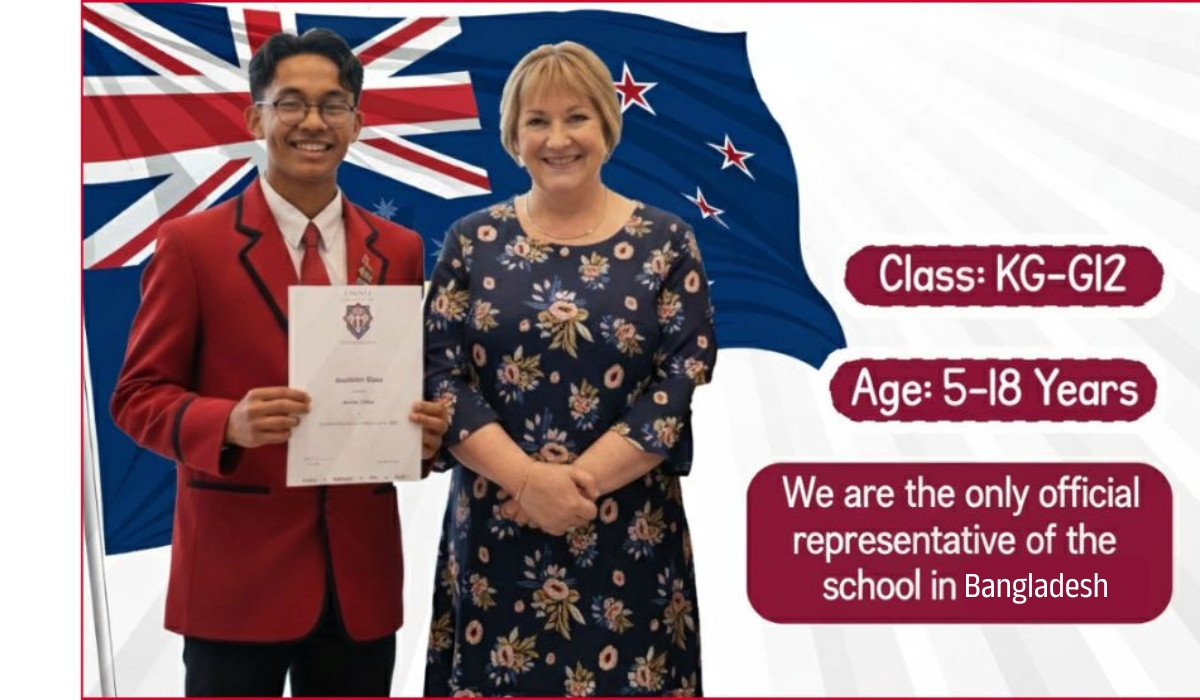
Compulsory education for international students covering primary, intermediate, and secondary schools (Years 1 through 13) operates under specialized fee-paying framework conditions. Minor students enrolling independently must provide proof of school acceptance and pre-paid tuition. Living maintenance thresholds for compulsory schooling are set at NZD $17,000 per year or NZD $1,417 per month.
Accompanying children aged 19 or younger whose parents hold eligible work or student visas may access the New Zealand school system via the Dependent Child Student Visa. Base application fees for this visa start from NZD $7509. Beneficiaries are treated as domestic students, exempting them from international tuition rates for primary and secondary schooling, with visa validity synchronized directly to the primary visa holder's permit.
Parents or legal guardians of international students aged 17 or younger or those enrolled in school Years 1 through 13 can obtain a Guardian of a Student Visitor Visa to reside in New Zealand as primary caregivers. The visa costs from NZD $441 and matches the duration of the dependent child’s student visa. It mandates primary caregiving duties while permitting conditional part-time work or study options, provided living maintenance fund minimums are satisfied.
| Visa Category |
Target Audience | Maximum Duration | Annual Living Fund Benchmark | Work Entitlements & Conditions | Base Fee (NZD) |
| Fee Paying Student Visa | Tertiary, Vocational, & Language Students | Up to 4 years | NZD $20,000 per year ($1,667/month) | Up to 25 hrs/week in term; full-time during breaks | $850 – $875 |
| Pathway Student Visa | Sequential Multi-Course Students | Up to 5 years | NZD $20,000 per year ($1,667/month) | Aligned with standard tertiary work entitlements | Standard student fee |
| Schooling Fee Paying Visa | Independent Minor Students (Years 1–13) | Annual / Course-based | NZD $17,000 per year ($1,417/month) | Restricted based on age and parental consent | Standard student fee |
| Dependent Child Student Visa | Dependents of Eligible Visa Holders | Aligned with Parent Visa | Proof of support ($17,000/year equivalent) | Domestic student status; no independent work | From $750 |
| Guardian Visitor Visa | Parent/Legal Guardian of Minor Student | Aligned with Student Visa | NZD $1,000/month (or $400 if lodging pre-paid) | Primary caregiving role; conditional part-time work | From $441 |
Demonstrating genuine access to sufficient, unencumbered funds is the most critical requirement for Bangladeshi applicants. Immigration Officers evaluate both primary fund availability and secondary provenance evidence to confirm that financial resources are authentic, legally acquired, and sustainably available throughout the applicant's stay.
For tertiary education, English language study, or non-compulsory programs, applicants must demonstrate access to at least NZD $20,000 for each year of study, or NZD $1,667 per month for courses shorter than 12 months. For compulsory schooling (Years 1 to 13), the threshold is NZD $17,000 per year or NZD $1,417 per month. These maintenance funds represent net living expense buffers exclusive of tuition fees and outward return travel costs.
Primary evidence acceptable to INZ includes bank statements reflecting account holder identity alongside a continuous three-month transaction history, fixed-term deposit certificates held for at least three months prior to application, formal scholarship award letters, and approved education loan disbursal documents. When evaluating secondary evidence, INZ scrutinizes the origin of accumulated capital. Recent or unexplainable large cash deposits raise substantial regulatory concerns. Applicants relying on liquid balances must submit tax returns, salary slips, employer verification letters, business registration certificates, or audited corporate tax filings confirming the original source of funds. If provident funds are presented, they must be paired with employment records directly linked to the fund account.
Immigration New Zealand enforces strict risk hierarchies regarding educational loans and bank-issued financial instruments originating from South Asia. Loans secured against fixed real assets and issued by public sector nationalized banks receive streamlined assessment, as INZ usually does not require supplementary proof of loan repayment capacity for these established institutions. Financial instruments issued by scheduled private sector commercial banks undergo deeper verification, requiring exhaustive documentation detailing income streams, collateral evaluations, and long-term debt servicing strategies. Conversely, INZ explicitly cautions against utilizing financial products from Non-Banking Financial Corporations (NBFCs) or non-scheduled entities. Applications backed by NBFC financing face significant processing delays and a high probability of refusal due to heightened risk regarding fund availability and liquidity legitimacy.
Financial support can be formalized through two distinct legal pathways. Sponsorship via Form INZ 1025 is restricted strictly to New Zealand citizens, permanent residents, or registered New Zealand organizations that can demonstrate a clear corporate or institutional connection to the applicant. Alternatively, an offshore third party or family relative can serve as a financial guarantor by executing the Financial Undertaking for a Student (Form INZ 1014). The guarantor must provide three months of personal bank statements or direct bank certification confirming that they hold sufficient, unborrowed liquid capital.
To mitigate fraud risks in international student markets, INZ operates the Funds Transfer Scheme (FTS) in partnership with ANZ Bank New Zealand Limited. Bangladeshi applicants are frequently required to adopt the FTS as an explicit condition of visa Approval in Principle (AIP). Under the FTS, the student opens an ANZ FTS savings account prior to departure and transfers one full year of maintenance funds NZD $20,000 for tertiary study or NZD $17,000 for primary/secondary schooling. Upon arrival in New Zealand, the student activates the account in person at an ANZ branch. An automated payment schedule is initiated, releasing a capped monthly allowance (NZD $1,666 for tertiary or NZD $1,416 for school students) into the student's everyday transaction account, ensuring that maintenance capital remains accessible solely for genuine living costs throughout the academic term.
New Zealand enforces strict regulatory standards regarding accommodation, welfare, and guardianship for international students under 18 years of age under the Education (Pastoral Care of International Students) Code of Practice. Education providers must verify that acceptable living arrangements are established prior to issuing a formal offer of place.
The regulatory framework mandates specific care arrangements based on applicant age. Students under 10 years of age must reside continuously with a parent or legal guardian for the full duration of their enrolment, unless they are lodged in an NZQA-approved school hostel. Students aged 10 to 17 years may study without a parent physically present only if the student resides in an approved residential caregiver framework. Acceptable residential caregivers include licensed school hostel managers, homestay families vetted and monitored by the education provider, or designated caregivers formally approved by the institution.
When a parent or legal guardian accompanies a minor student to New Zealand, they must hold a Guardian of a Student Visitor Visa. Only one parent or legal guardian can be granted this visa at any given time, regardless of the number of enrolled children in the household. The child must be aged 17 or younger, or enrolled in school Years 1 through 13.
The guardian visa carries strict statutory conditions. The parent must live in the same residence as the student and maintain primary caregiving responsibilities. The parent must demonstrate living funds of at least NZD $1,000 per month, or NZD $400 per month if residential accommodation fees are fully prepaid. The visa expires automatically if the student visa lapses or if the student turns 18. Guardian visa holders cannot engage in full-time employment, though limited part-time work or study entitlements may be requested via a Variation of Conditions, provided care obligations to the minor are fully maintained.
Visa processing efficiency depends heavily on the chosen education sector, seasonal application volumes, and document completeness. INZ calculates turnaround times using working days (excluding weekends and public holidays), measuring both the 50th percentile (average wait time) and the 80th percentile (completion window for the vast majority of applications).
Schooling visas exhibit the fastest processing turnaround among all international student categories. Primary and secondary school applications average a processing time of two weeks (10 working days), with 80% of applications completed within five weeks (25 working days)7. University applications are processed in an average of 2.5 weeks (12 to 13 working days), with 80% finalized within seven weeks (35 working days)7. Private Training Establishments (PTEs) average four weeks (20 working days), completing 80% within nine weeks (45 working days)7. Institutes of Technology and Polytechnics (ITPs) average 5.5 weeks (27 to 28 working days), with 80% resolved within nine weeks.
| Education Provider Sector | Average Wait Time (50th Percentile) | Most Completed Within (80th Percentile) |
| Primary and Secondary Schools | 2 weeks (10 working days) | 5 weeks (25 working days) |
| Universities | 2.5 weeks (12–13 working days) | 7 weeks (35 working days) |
| Private Training Establishments (PTEs) | 4 weeks (20 working days) | 9 weeks (45 working days) |
| Institutes of Technology & Polytechnics (ITPs) | 5.5 weeks (27–28 working days) | 9 weeks (45 working days) |
Across all international student visa classes combined, 80% of standard Fee Paying Student Visa applications are finalized within 8.5 weeks, while Guardian Visitor Visas achieve an 80% processing threshold within 8 weeks. INZ experiences major surges in application submissions between November and March annually, driven by Southern Hemisphere academic intake schedules. Applicants from Bangladesh are explicitly advised to submit complete visa applications at least three months (12 weeks) prior to their scheduled travel date to accommodate peak processing backlogs and background verification checks.
The operational workflow for Bangladeshi applicants follows a structured sequence. First, the applicant secures an unconditional Offer of Place from an NZQA-approved education provider. The offer document confirms the course title, total credit value (minimum 120 credits for annual tertiary programs), duration, and scheduled tuition fee structure. Next, medical examinations and chest X-rays are conducted by INZ-approved panel physicians operating eMedical submission systems in Dhaka or Chittagong. Health clearances must be less than three months old at the time of visa submission. Applicants aged 17 and older intending to stay for 24 months or longer must also obtain a Police Clearance Certificate from the Bangladesh Police, which must be under six months old and accompanied by a certified English translation.
Applications are lodged digitally via the RealMe portal on the Immigration Online platform. Paper submissions are no longer accepted for standard fee-paying visas. The applicant uploads scanned PDF copies of academic transcripts, English proficiency results (IELTS, PTE, or equivalent), bank records, employment letters, a Statement of Purpose (SOP), and a compliant passport photograph. Application fees (NZD $850–$875) are paid electronically via credit card.
Following digital lodgment, the applicant receives a Biometric Instruction Letter. The student must attend an appointment at a VFS Global Visa Application Centre (VAC) in Dhaka or Chittagong to provide digital facial images and 10-digit fingerprint scans. Applicants who opt for the AIP process receive a provisional approval notice once academic, character, and primary financial checks are completed. The AIP letter provides a strict 10-to-15-day window to execute required financial actions, such as paying annual tuition fees directly to the institution and funding an ANZ Funds Transfer Scheme account if mandated. Once tuition receipts or ANZ FTS confirmation letters are validated, INZ issues the formal e-Visa.
The integrity assessment conducted by Immigration Officers focuses heavily on assessing the bona fide status of offshore applicants. An analysis of refusal patterns highlights several primary systemic risks that Bangladeshi applicants must proactively address.
Unsubstantiated bulk cash deposits into bank accounts shortly before application lodgment trigger significant regulatory suspicion under INZ instructions. When balances show recent unexplained increases, officers routinely issue Concerns Letters demanding secondary historical proof of capital accumulation. To prevent refusal, all liquid assets presented must demonstrate a stable 3-to-6-month history or be paired with source documentation, such as asset sale deeds, verified inheritance paperwork, or audited business profit distribution records.
Generic or standardized Statements of Purpose downloaded from online templates frequently result in refusals based on failure to prove genuine temporary entry motives. A successful SOP must articulate clear academic continuity connecting prior completed qualifications in Bangladesh to the chosen course in New Zealand. It must present a compelling economic explanation justifying the financial investment in New Zealand tuition relative to anticipated salary gains upon returning to the Bangladeshi labor market, supported by explicit evidence of domestic economic, familial, or professional ties ensuring return travel upon visa expiry.
When funding relies on bank loans, presenting private sector or unapproved NBFC products without clear repayment strategies creates significant risk. Immigration Officers assess whether family income in Bangladesh can comfortably service loan interest and principal repayments without relying on prospective part-time earnings in New Zealand1. Utilizing public sector nationalized banks and presenting primary income documentation (such as tax returns and property rental agreements) drastically lowers processing risk and reduces verification delays.
Navigating the New Zealand student visa process from Bangladesh requires strict alignment with INZ evidentiary standards. While approval rates improved to 62% in 2025 alongside a significant increase in total application volume, this higher success rate reflects stricter compliance with financial transparency guidelines. Applicants maximize approval probability by initiating health and character checks three to four months prior to intake, securing liquid maintenance funds that meet updated annual thresholds (NZD $20,000 for tertiary. NZD $17,000 for compulsory schooling), avoiding non-scheduled banking loans, and strictly adhering to minor care and guardianship mandates where applicable.


 (1)_1761195127.webp)



.webp)


.webp)